
The Newsletter Monetisation Ladder: From Free Subscribers to $5K Retainer Clients

The question we hear most often from B2B newsletter operators is: how do you actually make money from this? The answer is a ladder, not a cliff. You do not ask someone who has read three issues to buy a $5,000 service package. You build the relationship, then you introduce each rung at the right moment.
The Ladder Structure
Here is the full model as we have designed it:
- Free subscriber: Someone joins one of our six niche newsletters. They cost us roughly $0.002/month in infrastructure. They get consistent, genuinely useful content. No ask, no upsell — just value delivery.
- Warmed lead (8–12 touchpoints): After 8–12 issues, a meaningful percentage of subscribers have developed enough familiarity and trust to engage with a commercial offer. We know who these people are from Mautic's behavioural scoring — they are opening emails, clicking links, and visiting our site repeatedly.
- Crescevo audit ($99–$299): The first commercial offer is a diagnostic audit of the prospect's existing content or newsletter operation. This is not a loss leader — it is a genuine deliverable. We assess their current content strategy, distribution setup, and conversion path, and produce a structured report with specific recommendations.
- Growth stack setup ($3,500–$5,000): For clients who want to act on the audit's findings, we build the infrastructure: Ghost publishing, email automation, subscriber pipeline, and behavioural scoring. This is a one-time project with a defined scope.
- Managed retainer ($1,500/month): Ongoing content strategy, editorial management, and pipeline optimisation. Priced on outcomes, not hours.
"The audit is the most important product in any service firm's lineup — not because of what it earns, but because of what it reveals. A good diagnostic tells you whether you want to work with this client before you are two months into a retainer discovering the answer the hard way."
— David C. Baker, Author, The Business of Expertise (2017)
Why the Audit Is Not a Loss Leader
Most agencies use a cheap assessment as a hook to get into a sales conversation. We deliberately make ours worth its price as a standalone product. A client who completes an audit and decides not to proceed with us still gets a useful document. This does two things: it means we only book audits with people who have genuine intent, and it means our reputation for the diagnostic product is independent of our close rate on the follow-on work.
Audits that are transparently designed as sales tools get treated as sales pitches. Audits that are designed as genuine diagnostics get treated as professional advice. The downstream conversion rate is higher in the second case, not lower.
Why Retainer Pricing Should Be Outcome-Anchored
We do not price retainers by the hour or by the deliverable count. We price against a defined outcome — for most clients, that is a specific subscriber growth target, a content velocity target, or a qualified lead volume target. The retainer fee is justified by the value of achieving that outcome, not by the hours required to achieve it.
This reframes the client relationship from vendor to partner. The client's incentive and our incentive are aligned: the engagement succeeds when the outcome is reached. Hourly billing misaligns those incentives — our revenue increases when more hours are worked, regardless of whether the work produces results.
The Compounding Math
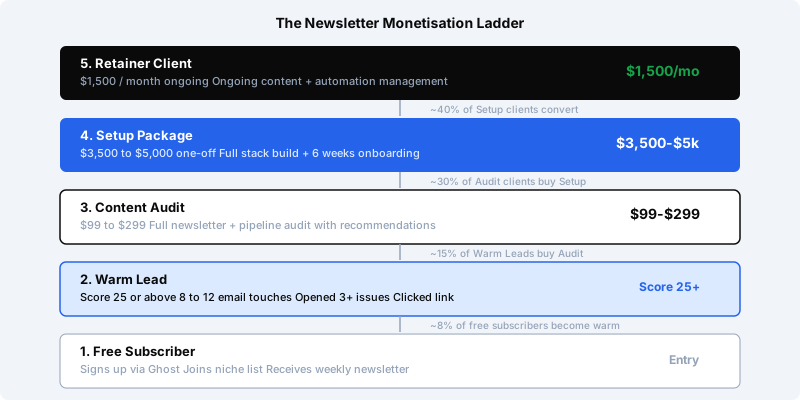
At 1,000 subscribers, this model generates roughly $14,000 in first-year revenue plus $2,250/month in recurring retainers. As the list grows, the recurring base compounds. At 5,000 subscribers with the same conversion rates, the retainer book approaches $11,000/month without adding headcount.
Why Most Agencies Skip the Trust-Building Phase
The ladder only works if you invest in the first two rungs before asking for money. That requires patience. It requires publishing 20 issues before your first audit offer. It requires treating the free subscriber as a long-term relationship, not a lead to be closed.
Most agencies skip this phase because they need revenue this month, not next year. They go straight to outbound sales, paid advertising, and proposal pitches to cold prospects. Their close rate is terrible because they are asking for trust they have not earned.
The firms that build newsletter-led growth pipelines are playing a different game entirely. By the time the commercial conversation starts, the hard work of trust-building is already done. The close rate reflects that — and so does the client lifetime value.