Why Newsletter-Led Growth Outperforms Paid Ads for B2B Service Firms

B2B paid advertising has a fundamental structural problem: the moment you stop paying, the audience disappears. Every dollar you spend builds equity for the platform, not for your business. Newsletter-led growth does the opposite — every issue you send builds an asset that compounds.
Rented vs. Owned Attention
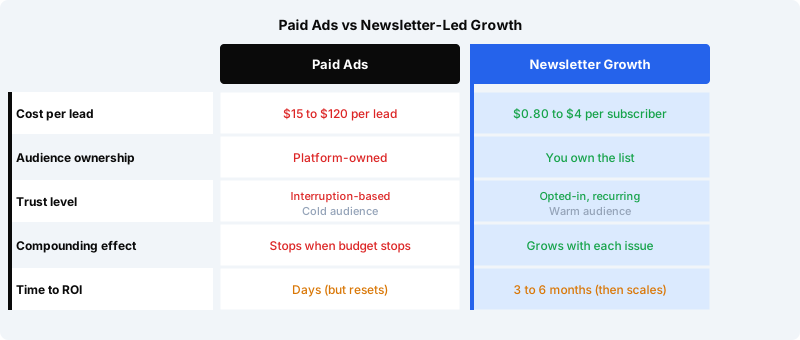
When you buy attention on LinkedIn, Google, or Meta, you are renting space in someone else's system. The algorithm changes, the CPM goes up, the targeting options shift — and your pipeline dries up with it. A newsletter subscriber, by contrast, is an owned contact. You have their email address. You can reach them directly, on your terms, for as long as they remain subscribed.
This distinction sounds like a tactical preference. It is actually a strategic moat. Firms with large owned audiences can weather platform changes, algorithm updates, and advertising market fluctuations. Firms dependent on paid channels cannot.
The Cost-Per-Lead Reality
B2B paid search and social advertising have a CPL that typically runs between $50 and $300 per lead for competitive service firm categories. Newsletter-led growth drives that number down substantially over time. The fixed cost of content production and email infrastructure is spread across an expanding audience, meaning your cost per new subscriber declines as the list grows.
The more important comparison is lifetime value, not just acquisition cost. A subscriber who has received 12 issues of your newsletter before converting is a fundamentally different prospect than someone who clicked a LinkedIn ad yesterday. Their close rate is higher, their contract value is higher, and their churn rate is lower.
"B2B buyers read an average of 3 to 7 pieces of content before engaging with a sales representative. Vendors who provide that content through owned channels have a structural advantage in the sales conversation."
— Forrester Research, B2B Buying Journey Report (2023)
The Trust Gap in B2B Buying
B2B purchases are high-stakes, long-cycle decisions made by committees. The average enterprise software deal involves 6.8 stakeholders and takes 9 months to close. In that environment, trust is not a nice-to-have — it is the primary decision variable.
Paid advertising does almost nothing to close the trust gap. An ad tells the buyer you have money to spend, not that you have expertise worth buying. A newsletter tells them, over many issues and many months, that you think carefully about their problems and have developed genuine perspective on them.
By the time a newsletter subscriber initiates a sales conversation, they have already decided you are credible. The job of the sales call is confirmation, not persuasion.
The Benchmark Comparison
The 8–12 Touchpoint Rule
Research consistently finds that B2B buyers need 8–12 meaningful touchpoints before they are ready to buy. Paid advertising can generate those touchpoints, but they cost money every time. A newsletter delivers them for the marginal cost of sending an email — which, at scale, is fractions of a cent per subscriber per issue.
This is why the LTV differential between newsletter-sourced clients and ad-sourced clients is so large. The newsletter subscriber arrived pre-warmed. The sales cycle is shorter, the discount pressure is lower, and the relationship starts from a position of established credibility.
Why Most Firms Don't Do It
The economics are obvious once you run them. The reason most B2B service firms still default to paid ads is not that ads work better — it is that ads produce results faster. A newsletter takes 6–12 months before the audience is large enough to generate meaningful deal flow. That requires patience most firms don't have and discipline most marketing teams can't sustain.
The math only works if you publish consistently. Consistently means every week, every month, regardless of whether anyone is reading yet. The firms that build durable newsletter-led growth pipelines are the ones that treated the first year as infrastructure investment, not performance marketing. The returns compound from year two onward.